The cozy fall colors signal not only the beginning of cozy evenings by a warm fire, but also that winter is coming. This means it's time to winterize your garden and especially your planters. The cold and frost can affect your plants quite a bit, especially when they are in containers. In this comprehensive guide, we unfold a practical step-by-step plan to protect your plants from the winter elements and look at the bountiful benefits of Corten steel.
The importance of frost protection in plants
When temperatures drop and the ground freezes, it can be a huge blow to life in your garden. Plants that live in containers feel this impact even harder because their roots cannot nestle as deeply as their outdoor counterparts. This makes them extremely susceptible to the winter cold. A winterization plan can significantly reduce this risk.
Winterizing planters: a 3-step plan
- Pre-Frost Hydration: Make sure your plants get plenty of water before the first frost. Water acts as an insulator and helps protect your plants' roots from falling temperatures.
- Apply an insulating protective layer: An insulating layer on top of the soil can help prevent drying out from winter winds and provide additional protection from intense cold. Use straw, fallen leaves, or coir mats.
- Move and pack: If you can, move your planters to a protected spot, such as a covered patio or against the wall of your house. This will offer them extra protection from cold and wind. You might also consider packing your planters with insulating material to further strengthen their resistance to the winter cold.
Why choose corten steel?
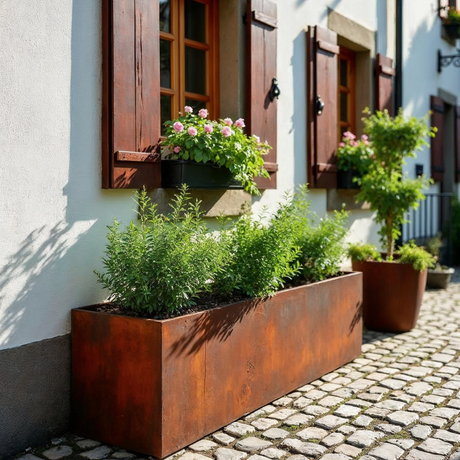
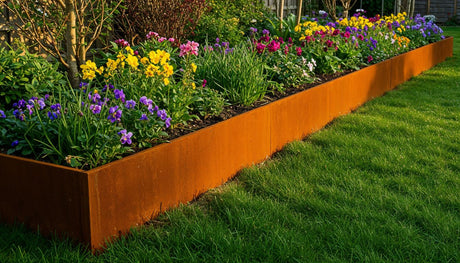
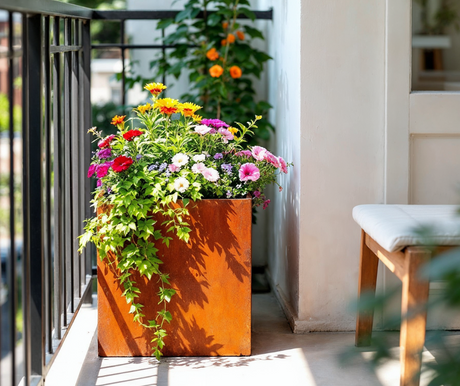
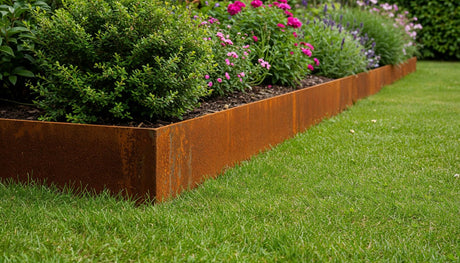
Corten steel is not only an eye-catcher thanks to its rust-colored, industrial look, but it is also one of the most robust materials available for garden accessories such as planters. Let's take a look at the benefits corten steel has to offer:
- Frost resistant: Thanks to the durability of Corten steel, planters made of this material can survive even the harshest winters. So you don't have to worry about the material cracking or breaking due to frost.
- Insulating properties: Due to the thickness and density of Corten steel, it has a natural resistance to sudden temperature changes, helping to keep the soil in the container at a constant temperature.
The step-by-step plan, combined with the strength of Corten steel, enables any planter to defy winter. Don't let the winter cold stop you from getting the most out of your garden.